
What Is Rapid Freezing? How It Preserves Quality and Reduces Food Loss
For restaurant owners and food-related businesses, extending shelf life while maintaining ingredient quality is a critical management issue. One technology attracting increasing attention is rapid freezing. However, many people still wonder, “How is it different from ordinary freezing?” or “Does it really preserve quality?” In this article, we provide a detailed explanation of how rapid freezing works and its benefits. By reading this article, you will discover the optimal freezing method for your business and daily life.
Contents
What Is Rapid Freezing? [Basics]

Rapid freezing is a freezing technology that rapidly cools food in a short period of time. Compared to conventional freezing methods, food is frozen at an overwhelmingly faster speed, minimizing damage to cellular structures.
This technology is widely used in the food industry and has recently gained attention for household food storage as well.
Definition and Mechanism of Rapid Freezing
A key point in rapid freezing is passing through the “maximum ice crystal formation zone” as quickly as possible. This zone refers to the temperature range between 0°C and -5°C, where water inside food begins to freeze.
When food passes through this zone slowly, large ice crystals form inside, breaking cell walls.
In contrast, rapid freezing passes through this temperature zone quickly, keeping ice crystals small. This prevents cell wall damage and significantly reduces drip (nutrients and umami lost with moisture) during thawing.
Difference Between Rapid Freezing and Slow Freezing
The main differences between rapid freezing and slow freezing lie in freezing speed and ice crystal size.
Rapid freezing forms small ice crystals, preserving food quality.
Slow freezing takes time, resulting in large ice crystals and increased drip. This difference is why rapid freezing is highly valued for preserving original taste and texture.
Benefits of Rapid Freezing

Rapid freezing not only preserves food quality but also reduces food loss. It also improves productivity and enables long-term storage without additives.
Quality Preservation
The greatest benefit of rapid freezing is its ability to preserve food quality at a high level. Rapid freezing prevents ice crystal formation, maintaining texture and flavor even after thawing.
Fresh fish and meat, for example, can retain their original taste and texture for long periods.
Food Loss Reduction
Rapid freezing extends shelf life, reducing discarded food.
Surplus or seasonal ingredients can be frozen and used later, reducing waste and environmental impact while lowering procurement costs.
Productivity Improvement
Rapid freezing improves productivity in food businesses.
– Batch preparation and freezing
– Labor cost optimization
– Quick thaw-and-serve operations
– Efficient inventory management
This enables stable supply while maintaining quality.
Types of Rapid Freezing (Commercial Freezers)
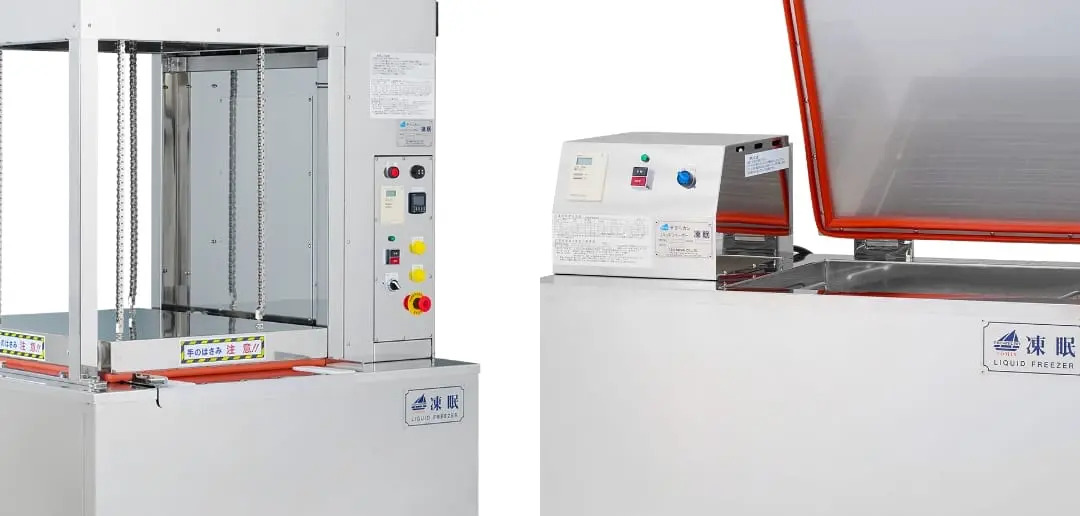
Representative rapid freezing methods include air-blast freezing, liquid freezing, and liquid nitrogen freezing.
Air-Blast Freezing
Uses cold air circulated at high speed. Suitable for large or irregularly shaped foods. Affordable and easy to operate, but freezing speed may be uneven.
Liquid Freezing
Food is immersed in or sprayed with cooling liquid such as alcohol or propylene glycol.
This method passes through the ice crystal formation zone extremely quickly, preventing tissue damage and maintaining high quality. Ideal for premium ingredients or foods requiring minimal drip.
Technican’s Liquid Freezing “Tomin”

“Tomin,” developed by Technican, a pioneer in liquid freezing technology, freezes food at -30°C using liquid, achieving far faster freezing than air-based systems.
It minimizes drip and preserves pre-freezing quality, contributing to food loss reduction and customer satisfaction. Models range from household to large-scale commercial use.
For details on cryosleep, please see here.
Foods Suitable for Rapid Freezing
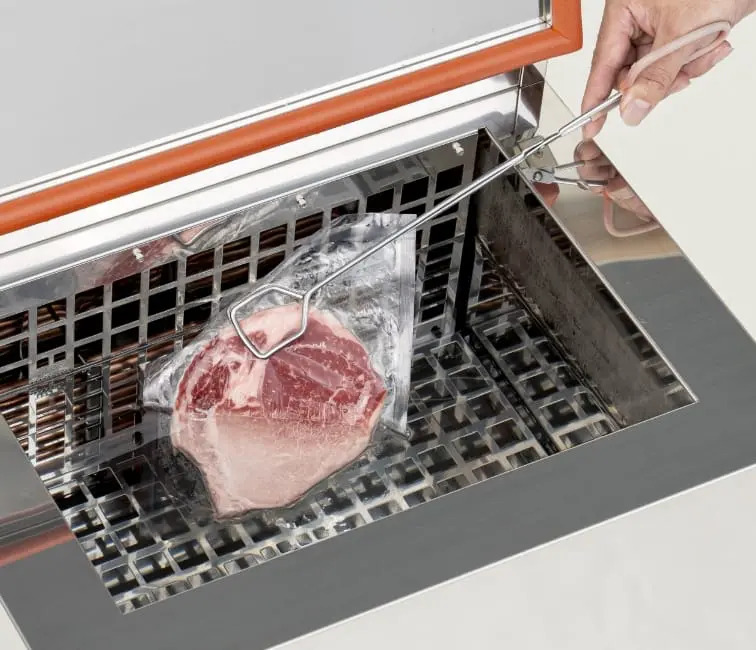
Rapid freezing is effective for many foods, especially:
Raw meat and sashimi
Minimizes cell damage, preserves freshness, reduces food safety risks.
Fruits and vegetables
Maintains crispness and juiciness year-round.
Rice, bread, prepared meals, bento boxes
Preserves freshly cooked texture and flavor, ideal for busy households and workplaces.
How to Introduce Rapid Freezers

Successful introduction requires careful planning.
Food manufacturers should select models based on production volume and food types.
Ensure installation space, power supply, and staff training. Post-installation, proper operation and maintenance are essential. External expert support can further enhance effectiveness.
Comprehensive Support from Technican
Technican provides full support before and after installation of “Tomin.” In addition to maintenance and after-sales service, free freezing tests are offered before installation.
If you have concerns about introduction or operation, Technican’s support system ensures peace of mind.
For inquiries regarding Technican, please contact us here.
Rapid Freezing Will Transform the Future of Food
Rapid freezing is not just a preservation method but a technology that solves challenges such as quality preservation, food loss reduction, and productivity improvement.
Among rapid freezing methods, liquid freezing achieves outstanding speed and quality.
Technican’s liquid rapid freezer “Tomin” overturns the conventional belief that freezing reduces quality and is attracting attention as a technology paving the way toward a food-loss-free future.

