
Revolutionizing the Bento Business with Rapid Freezing: Solving Quality, Cost, and Food Loss Challenges
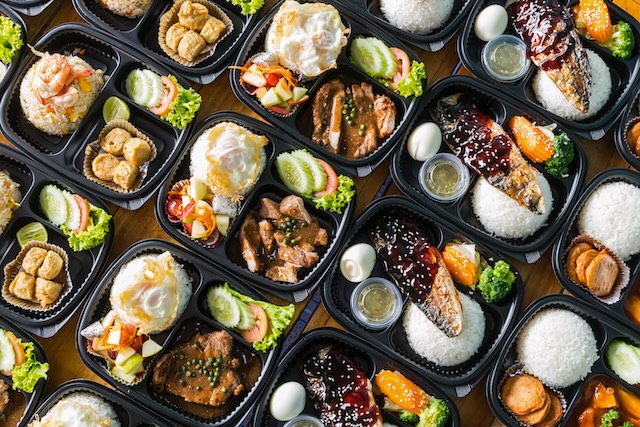
“Won’t freezing bento meals ruin the taste?” “Are the benefits really worth the investment cost?” If you are involved in bento production or sales, you may have asked yourself these questions at least once. However, modern rapid freezing technology has evolved to the point where it overturns such concerns. In this article, we highlight real success stories from businesses that have introduced rapid freezing for bento meals. Along with the benefits of adoption and key thawing points, we explain in concrete terms how rapid freezing can solve challenges faced by the bento business.
Contents
- Case Studies of Introducing “Tomin” Rapid Freezing for Bento Meals
- Key Points for Rapid Freezing Bento Meals
- Types of Bento Meals Suitable for Rapid Freezing
- Benefits of Introducing “Tomin” for Bento Businesses
- Recommended “Tomin” Series for Bento Meals
- Expanding the Future of the Bento Business with Rapid Freezing
Case Studies of Introducing “Tomin” Rapid Freezing for Bento Meals
Rapid freezing of bento meals is not merely a preservation method. It is a business strategy that enables market expansion, food loss reduction, and delivery of freshly prepared taste directly to customers.
Below are three case studies of businesses using Technican’s rapid freezer “Tomin.”
Case (1): Selling Frozen Bento Meals Made with Local Eco Vegetables via Vending Machines
ARUNŌ, a share kitchen operator in Yokohama, produces community-based eco bento meals using non-standard local vegetables from Yokohama.
While they handcraft healthy bento meals for many elderly customers, their major challenges were operational efficiency and long-term storage.
After introducing “Tomin,” they were able to separate production and sales processes, enabling efficient task allocation despite labor shortages. Because they produce bento meals without preservatives, rapid freezing allowed long-term storage without compromising taste.
After thawing, customers commented that “the rice tastes freshly cooked.” Tasting tests revealed a strong aroma reminiscent of newly harvested rice.
As a multi-purpose facility combining a share kitchen, ARUNŌ also serves as a test sales venue for aspiring restaurant owners. With frozen vending machines, they can test product sales without waste.
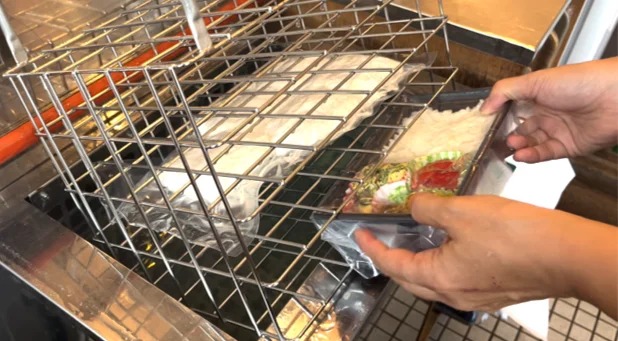
Case (2): Wholesale Sales of Frozen Sauna Meals through Collaboration with Hot Spring Facilities
Yunoizumi Tōmei Atsugi Health Center in Kanagawa Prefecture developed microwave-heatable “sauna meals” to address reduced late-night dining during the COVID-19 pandemic.
They freeze energy-boosting meals such as curry using “Tomin.”
Executive Chef Mr. Nagasawa praised the results, stating, “With ordinary freezing, vegetables in curry release water after thawing, but with Tomin, this doesn’t happen.”
Flavor loss and texture defects were eliminated, successfully locking in freshly prepared taste.
Beyond in-house use, they expanded into contract production for other hot spring facilities, hotels, and soup specialty shops. Viewing collaboration as mutual support within the industry, they established a new cooperative business model.
Case (3): Stylish Rapid Freezing of Seafood Bowl Toppings for E-Commerce
“Umisachi,” a seafood bowl restaurant in Minato Ward, Tokyo, introduced “Tomin Mini” to expand its market reach.
They age tuna, salmon, and sea bream, then freeze them at peak flavor using Tomin. By sealing in umami, they consistently provide high-quality products.
Sold at approximately ¥5,000 per set, these premium products are also popular for celebratory occasions. Emphasis is placed on visual appeal and easy plating.
In addition to maintaining quality through long-term storage, rapid freezing significantly reduced food loss, directly improving depreciation rates. Remarkably, equipment costs were recovered in approximately three months.
Key Points for Rapid Freezing Bento Meals

Even with rapid freezing, improper thawing can compromise quality. Because bento meals are particularly sensitive, it is essential to follow best practices.
Avoid Refrigerator Thawing
Slow thawing in a refrigerator is not recommended, as it degrades rice texture. For rapid-frozen bento meals, natural thawing or microwave heating is preferable. Steam convection ovens can also help maintain moist texture.
Thaw Ingredients Separately
Depending on the bento format, separating ingredients during thawing further improves quality.
For seafood bowls or sushi, rice should be heated quickly in a microwave, while toppings such as tuna or salmon should be thawed slowly at room temperature. Combining optimal thawing methods by ingredient achieves exceptional results.
Types of Bento Meals Suitable for Rapid Freezing
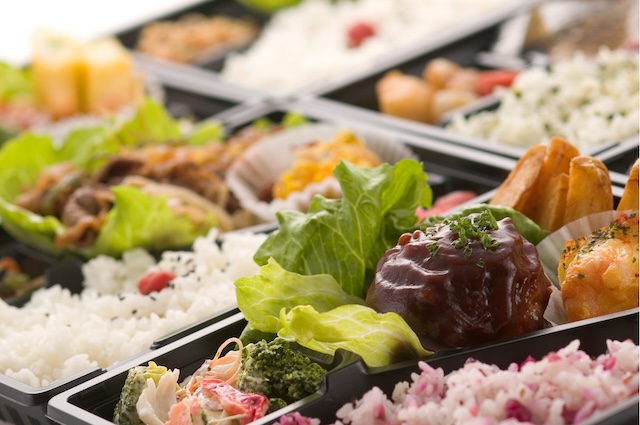
Liquid freezing systems like Tomin freeze quickly, minimizing cellular damage and accommodating a wide variety of menus.
Rice-based bento meals: grilled meat bento, chicken or pork dishes, seafood bowls, sushi
Noodles: udon, soba
Ethnic and international cuisine: Chinese bento (e.g., mapo tofu, stir-fries), curry
With proper menu design and thawing methods, most bento meals can be successfully rapid-frozen.
Benefits of Introducing “Tomin” for Bento Businesses

Introducing “Tomin” offers more than quality preservation—it improves overall business performance.
Expanding Sales Channels
Frozen bento meals enable nationwide sales via e-commerce, wholesale distribution to hot spring facilities, hotels, and offices, and even after-hours sales through frozen vending machines.
Reducing Food Loss
Because bento meals have short shelf lives, food loss is common. Rapid freezing enables long-term storage and flexible response to demand fluctuations, directly improving profit margins.
Improving Hygiene
Rapid freezing quickly passes through the temperature danger zone (10°C–60°C), reducing bacterial growth and food poisoning risk. This enhances hygiene management even with long-term storage.
Developing New Menus
Freezing-based operations allow the use of delicate ingredients and labor-intensive cooking methods previously unsuitable for bento meals. This facilitates development of high-value frozen bento products.
Recommended “Tomin” Series for Bento Meals
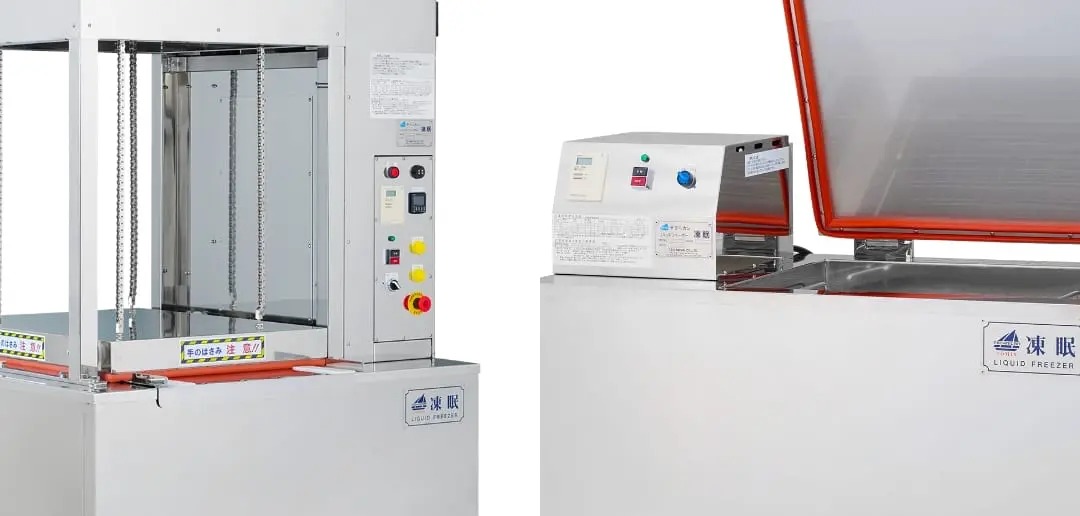
Technican offers multiple “Tomin” models tailored to different business scales.
S-220WL: Easy Installation and Mobility
An integrated unit requiring no piping work. Equipped with shelf and basket trays to accommodate various bento sizes. Casters allow easy relocation.
LM-45: Lift-Type Model for Heavy Workloads
A mid-sized model suitable for freezing large volumes at once. Lift mechanism reduces physical strain. Installation and piping are fully supported.
Tomin Mini: Ideal for E-Commerce
A compact model (approx. 60 cm square) with multiple variations. Supports pre-purchase freezing tests and sales channel expansion.
Expanding the Future of the Bento Business with Rapid Freezing
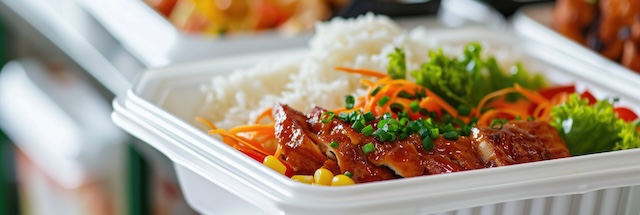
Rapid freezing of bento meals preserves freshly cooked rice texture and original flavors after thawing, while significantly reducing food loss and labor costs.
Long-term storage enables expansion into e-commerce and wholesale channels beyond physical stores.
As demonstrated by numerous success stories, rapid freezer adoption is driving growth in the bento industry. We encourage you to consider Technican’s proprietary liquid freezing technology “Tomin” as a strategic investment.

