
Benefits of Introducing Rapid Freezers for Restaurants: Use Cases and Selection Tips
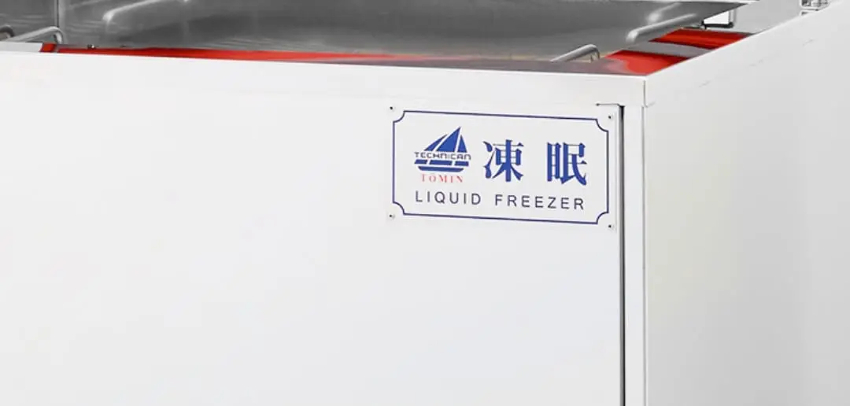
Ingredient quality deterioration and food loss are unavoidable challenges for restaurants. Especially in environments where cost control is strict, even small amounts of waste can significantly impact business performance. One solution attracting attention today is the introduction of rapid freezers. By enabling long-term storage while preserving freshness, restaurants can reduce waste and use ingredients efficiently only as needed. This article provides a clear explanation of rapid freezing technology, its benefits, and real-world use cases of Technican’s “Tomin” series. We also introduce key points for selecting equipment, making this article useful for those seeking efficient ingredient management while keeping costs under control.
Contents
What Is Rapid Freezing Technology?
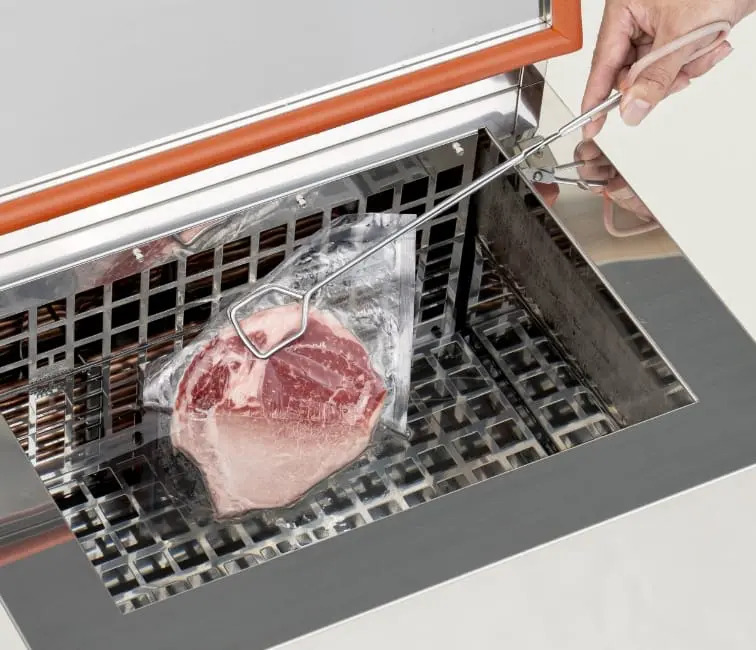
Rapid freezing refers to a technology that freezes food in a very short time.
Its key feature is the ability to minimize ice crystal formation within food, allowing freezing with minimal damage to cell membranes. As a result, flavor and texture are preserved even after thawing, maintaining a fresh condition.
Common rapid freezing methods include blast chillers and shock freezers that use powerful cold air, as well as methods utilizing ultra-low-temperature liquid nitrogen. All are highly effective at maintaining freshness and restoring original taste when needed.
Among advanced rapid freezing technologies, Technican’s proprietary “Tomin” technology has gained particular attention.
Rather than simply freezing food quickly, Tomin uses unique know-how and precise control to achieve uniform, ultra-fine ice crystal formation, successfully minimizing quality deterioration during thawing.
Ingredient Challenges Faced by Restaurants

For restaurants, ingredient waste and quality deterioration are serious issues directly affecting sales and trust. Fresh ingredients are particularly sensitive, where even minor handling mistakes can lead to quality loss or hygiene problems, requiring highly accurate inventory and purchasing management.
If excessive quantities are purchased and ingredients remain unused, food loss increases, worsening cost ratios and disposal expenses. Missing the optimal timing for preparation can also compromise taste and appearance, lowering customer satisfaction.
To address these challenges, rapid freezers are gaining attention as an effective solution.
Below, we examine the specific benefits of rapid freezing from perspectives such as food loss reduction, quality preservation, operational efficiency, and revenue growth.
Food Loss
Food loss is one of the most common problems in restaurant management. Surplus ingredients generated during operations or unsold menu items are often discarded.
By using rapid freezers, surplus ingredients can be frozen on the same day, significantly expanding reuse possibilities.
Preserving quality while storing ingredients reduces waste and supports cost optimization and reduction.
Preserving Ingredient Quality
Maintaining ingredient quality is directly linked to customer satisfaction. Improper temperature control or storage methods accelerate deterioration.
Rapid freezers allow even seasonal ingredients to be stored long-term while preventing deterioration, preserving freshness and nutritional value.
Consistently providing high-quality dishes naturally leads to higher customer satisfaction.
Improving Work Efficiency
During peak lunch and dinner hours, restaurants operate under constant time pressure, where efficiency down to the minute is critical. Advance preparation is key to saving time and labor.
With rapid freezers, preparation can be done in batches, and only required portions can be thawed when needed. This reduces cooking workload, eases staff burden, and enables efficient operations even with limited personnel.
Tomin, in particular, allows fine-tuned freezing conditions for each ingredient, making it easy to adapt to different restaurant styles and operations.
Increasing Revenue
Introducing rapid freezers ultimately contributes to increased revenue.
By consistently providing high-quality dishes without wasting ingredients, restaurants gain customer trust. Additionally, seasonal ingredients can be stocked strategically, enabling early seasonal menu development and limited-time offerings.
As a result, restaurants can increase repeat customers, average spending per customer, and new customer acquisition, differentiating themselves from competitors.
Use Cases of Rapid Freezers Solving Ingredient Challenges
Technican’s Tomin, which achieves high-quality freezing, has been introduced across various restaurant formats.
Below are examples demonstrating how Tomin solves ingredient challenges and creates new value.
High-End Reservation-Onry Sushi Resaturant

At the reservation-only high-end sushi restaurant “Shinpaku” in Ebisu, Tokyo, the compact rapid freezer “Tomin Mini” was introduced.
The owner decided to install it after being advised by fishermen in Ishinomaki that “freshly caught fish can be frozen without losing quality.” Tomin allows freshness preservation while addressing anisakis parasite control.
Large ingredients such as minke whale can be purchased in bulk and thawed as needed, reducing food loss and improving efficiency. When regular customers were challenged to identify sushi made from frozen ingredients, none could tell the difference, demonstrating the high quality.
Use in In-House E-Commerce Sales
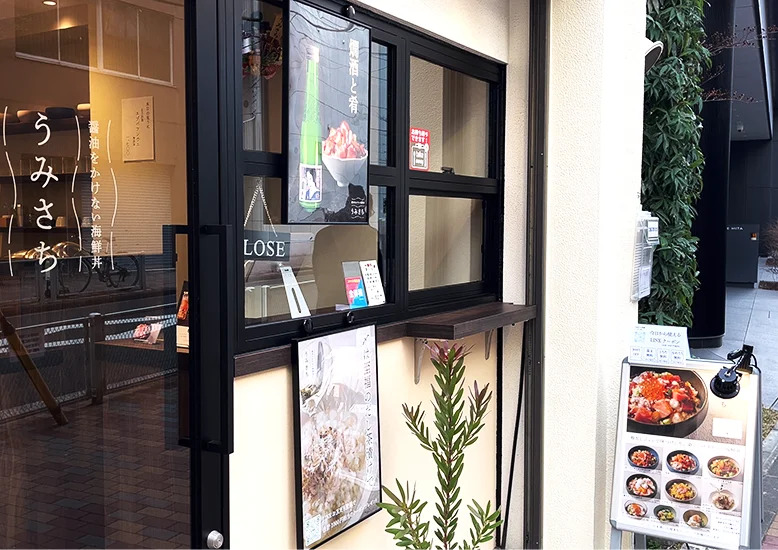
At “Umisachi,” a seafood rice bowl restaurant in Minato-ku, Tokyo, Tomin Mini was introduced to strengthen in-house e-commerce sales.
Tuna, salmon, sea bream, and other seafood are aged and then rapidly frozen at peak condition, enabling stable delivery of high-quality products. With premium packaging, products are sold at approximately ¥5,000 each.
Strong sales allowed recovery of equipment costs in about three months, and the restaurant is considering introducing a larger Tomin model.
Restaurant and Frozen Gournet Specialty Store
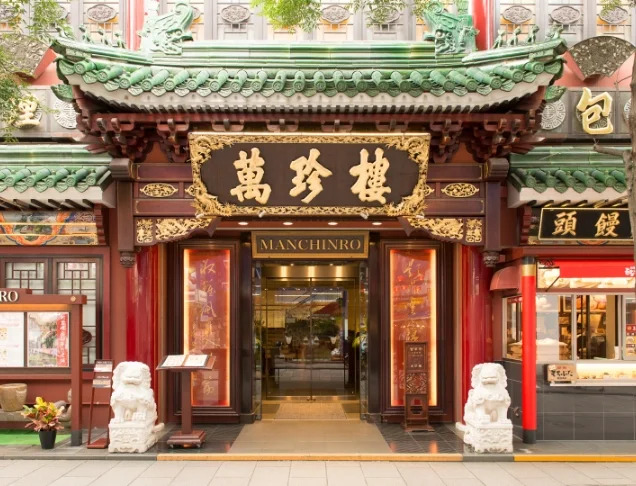
At the long-established Chinese restaurant “Manchinro” in Yokohama Chinatown, frozen gourmet products are produced and sold under the brand “Manchin Tomin-kan.”
The first floor sells frozen products, while the second floor is dedicated to production for stores and online sales. Rapid freezers are also installed in restaurant kitchens, enabling efficient use of idle time.
Frozen gourmet products are optimized for reheating across various microwave models, earning praise from regular customers as “different from other frozen foods.”
How to Choose a Rapid Freezer

To maximize the benefits of rapid freezers, consider the following points:
– Processing capacity and installation space
– Freezing temperature and cooling time
– Power consumption and operating costs
– After-sales service support
Processing Capacity and Installation Space
Select capacity appropriate to restaurant size and usage frequency. Insufficient capacity increases freezing time and risks quality loss, while excessive capacity increases costs and power consumption.
Compact, high-performance models are ideal for small restaurants. Consider workflow, ventilation, and drainage when planning installation.
Freezing Temperature and Cooling Time
Choose models capable of rapid freezing at low temperatures to minimize cell damage and drip. For seafood and meat, models capable of freezing below -30°C are recommended.
Shorter cooling times result in smaller ice crystals and better quality preservation.
Power Consumption and Operating Costs
Power consumption is a major cost factor. Energy-efficient models reduce costs and support environmentally conscious management.
Also consider long-term maintenance and repair costs by selecting reliable brands with strong support systems.
After-Sales Service Support
Since rapid freezers are long-term investments, reliable after-sales service is essential.
Technican, known as a pioneer in liquid freezing technology, offers comprehensive maintenance support and durable equipment design for long-term reliability.
Conclusion: Maximizing Restaurant Value with Rapid Freezers
Rapid freezers are essential tools for preserving ingredient quality and improving operational efficiency in restaurants. They reduce food loss and costs while contributing to increased revenue.
When selecting a rapid freezer, consider processing capacity, installation space, freezing performance, power consumption, and support systems.
By choosing and utilizing rapid freezers effectively, restaurants can achieve more efficient and profitable operations. Rapid freezers are not merely equipment, but valuable partners supporting restaurant success.

